Nutrition Facts
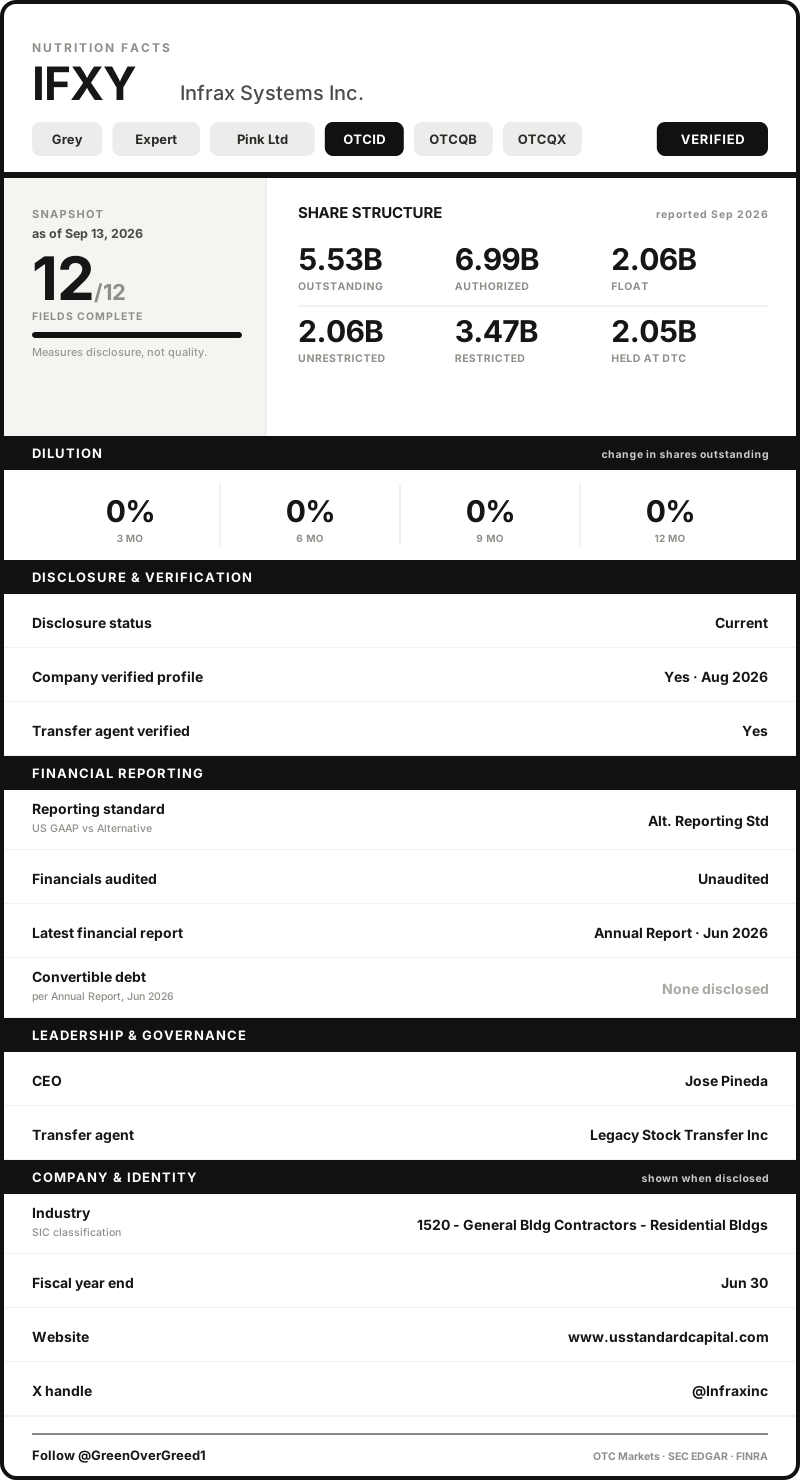
A one-page disclosure snapshot for a single OTC company, styled like a nutrition label, so you can see what a company has and has not disclosed in one look.
Why this exists
Everything else on this calendar is about trading. This card is not. It is about a single company's public paper trail: what it has told OTC Markets, what it has filed with the SEC, and what a transfer agent has confirmed. The nutrition-label format is deliberate. A food label does not tell you whether a product tastes good, only what is in it, and this card works the same way. It reports what has been disclosed, not whether the company is a good investment.
The "12/12 fields complete" line under Snapshot is printed on every card, in the same place, every time: it measures disclosure, not quality. A company can complete every field on this card and still be a bad investment. A company can be missing several and still be a good one. Completeness is not a score.
Why it does not run on a schedule
Every other publication on this calendar posts at a fixed time because it is built from the same market data every day or every week. This card is built from one company's disclosures, and it only gets built when there is a company worth writing up. It has no day, no time, and no place on the weekly calendar. It appears when it appears.
The header: ticker, name and tier
The ticker and company name sit at the top, followed by a row of pills for every OTC Markets tier, from Expert Market up through OTCQX. The tier the company is actually on is filled in solid; the rest sit grey for reference, so a reader unfamiliar with the tier system can see at a glance where this one sits relative to the others. IFXY, on the sample above, trades on OTCID.
The black VERIFIED badge at the far right is OTC Markets' own company verification mark, not something scored on this site. It means the company has completed OTC Markets' verification process for its profile, shown again lower on the card as Company verified profile with the month it happened.
Snapshot and share structure
The left panel is the card's own honesty check: a count of how many of the fields on the rest of the card are filled in, out of the total the card tracks, as of the date shown. A field is either reported by the company or it is not; there is no partial credit and nothing is estimated to fill a gap.
The right panel is the share count as OTC Markets has it on file: shares outstanding, authorized, and float across the top, then unrestricted, restricted and shares held at DTC underneath. Outstanding is the total share count that exists. Float is the portion actually available to trade. The gap between them, when there is one, is stock that is issued but restricted, held by insiders, or otherwise not on the open market.
Dilution
The change in shares outstanding over the trailing 3, 6, 9 and 12 months. A reader who has watched an OTC name get diluted knows why this row exists: a rising share count without a matching rise in the business behind it is one of the most common ways value leaves an OTC stock. Four flat 0% figures, as on the sample, mean the share count has not moved over any of those windows as of the reporting date. It is a look backward, not a promise about what happens next.
Disclosure & verification
Whether the company's OTC Markets disclosure is current, whether its company profile has been verified and when, and whether its transfer agent has been verified. These three lines are about paperwork being current and confirmed, not about the numbers in that paperwork being good.
Financial reporting
What standard the company reports under, US GAAP or an alternative standard; whether its financials are audited; the most recent report on file and its period; and any convertible debt disclosed in that report. Unaudited and None disclosed are reported the same plain way as anything else on the card. Neither is flagged as good or bad here, because that judgment depends on the company and the reader, not on the card.
Leadership & governance, company & identity
The CEO and transfer agent of record, then whatever identity fields the company has made public: SIC industry classification, fiscal year end, website and X handle. The Company & Identity section is labelled "shown when disclosed" because these are the fields most likely to be missing entirely for a thinly covered company, and a blank row there is itself information.
What it does not mean
- It is not a rating. There is no score, no letter grade and no pass or fail. A complete card and an incomplete one are both just a record of what has been disclosed as of the date shown.
- It is not a recommendation. Nothing on the card is a call to buy, hold or avoid the stock.
- Verification is about the paperwork, not the business. "Company verified profile" and "Transfer agent verified" confirm that OTC Markets has checked the company's identity and its transfer agent. Neither one confirms that the business is sound, that its financials are accurate, or that its disclosures are complete beyond what is checked.
- A snapshot goes stale. Everything on the card is dated as of the day it was built. Share structure and dilution figures move; check the company's current OTC Markets profile before relying on anything here.