On this page
01What is in the post
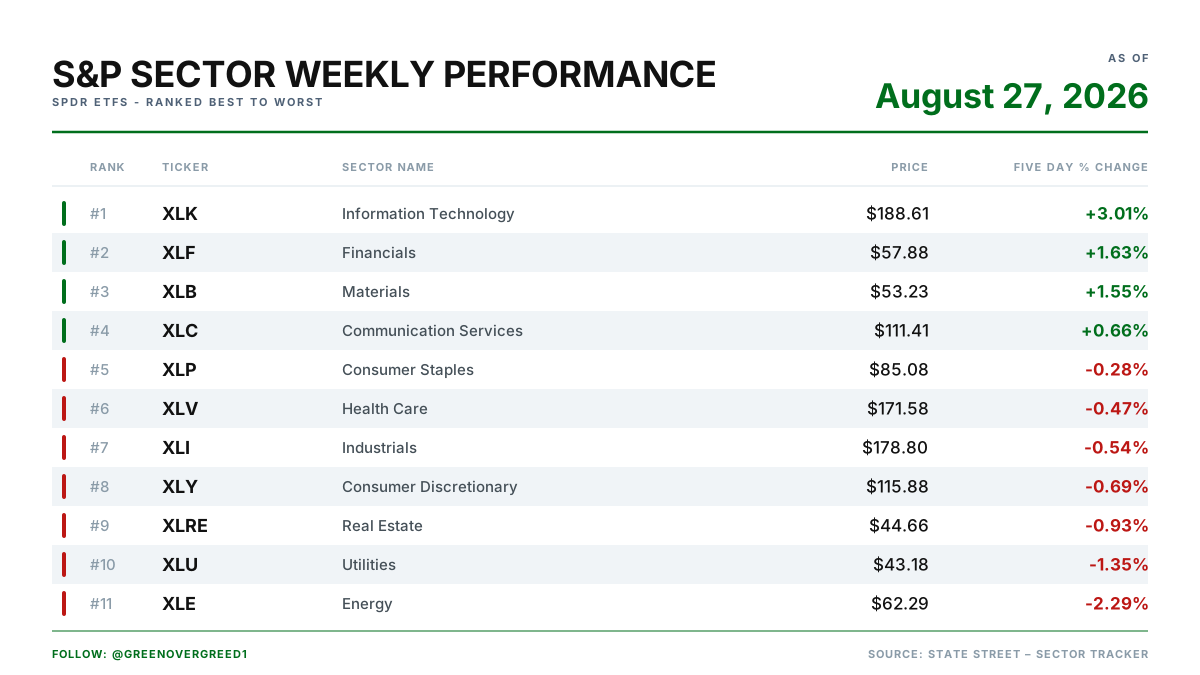
Eleven sector exchange-traded funds, one per S&P sector, ranked by percent change across the week just ended, with an image carrying the same eleven as a ranked board and a written reply.
02Why an OTC account publishes a large-cap sector board
Because the OTC tape does not trade in a vacuum. Risk appetite in small caps follows the broad market's willingness to hold cyclical and growth exposure, so knowing what kind of week the large-cap market just had gives the OTC boards published alongside it a context they otherwise lack. A week where energy and financials led and technology lagged describes a different environment for speculative names than the reverse.
03The eleven sectors
Technology, communication services, consumer discretionary, consumer staples, energy, financials, health care, industrials, materials, real estate and utilities. Prices and percent changes come from State Street, the issuer of the funds.
04Why weekly and not daily
A single session's sector ranking is mostly noise. Five sessions of it is a rotation, and rotation is the part that carries information.
There was a daily version of this asset, posted Tuesday through Saturday, each covering the session that had closed the day before. It is retired. The weekly board says the same thing with less of the noise, and running both was mostly repetition.
05How to read it
- Compare it against the prior week's post. The change in rank order is the signal, not this week's order in isolation.
- Watch the spread. A narrow spread across eleven sectors is an indecisive week.
- Defensives at the top is a posture. Staples and utilities leading a week usually describes money stepping back.
06What it does not mean
- It is not a sector allocation view. No positioning is being suggested.
- It does not predict the coming week. Sector leadership rotates and the leader is frequently not repeated.
- It is not linked to any OTC name. The context is general, not specific.