Top 20 by Dollar Volume
The twenty OTC names priced under a dime that moved the most actual money in today's session.
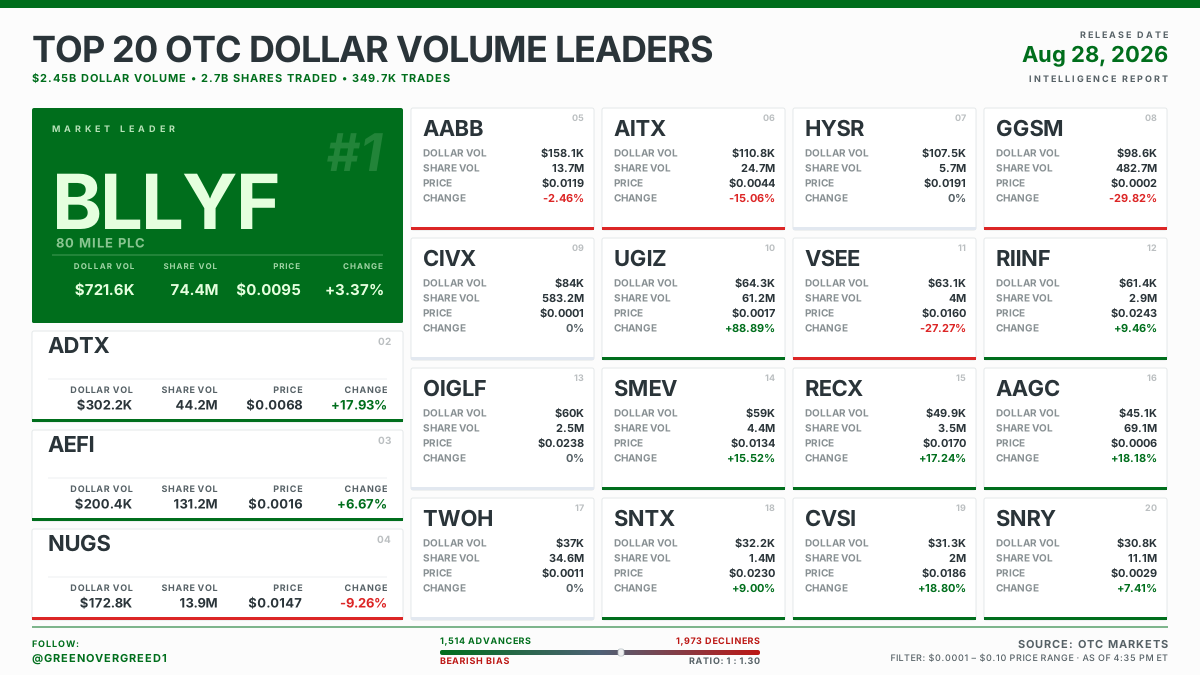
Dollar volume is shares traded multiplied by the price they traded at. It is the only volume measure that is comparable across a market where one name trades at $0.0001 and another at $0.09.
Why dollar volume and not share volume
Share volume is the number everyone quotes and it is close to meaningless on its own in this price range. A trip-zero name at $0.0002 can print two billion shares in a session and that is $400,000 of actual money. A penny name at $0.08 can print forty million shares and that is $3.2 million. On a share-volume board the first one is a monster and the second one is a footnote. On this board it is the other way around, and the second one is closer to the truth about where money went.
Both boards are published every weekday, twenty minutes apart, on purpose. Reading them side by side is the point. See the Top 20 Shares Traded Volume page for the other half.
Where the numbers come from
OTC Markets, the venue's own end-of-session market data, using its reported dollar-volume figure rather than anything derived. The board covers names priced between $0.0001 and $0.10. It is a sub-dime board by design, so a name at $0.14 that traded $9 million will not appear.
Reading the image
The header carries the board title and, in green underneath it, three market-wide figures for the session: total dollar volume, total shares traded, total number of trades. That line is the whole OTC market, not the twenty names below it. The session date sits top right.
The hero cell
Rank one gets its own large cell, with the company name where the name lookup has it. Four figures sit inside every cell, hero and ordinary alike:
| Field | What it is |
|---|---|
| DOLLAR VOL | Money that changed hands in this name today. This is what the board is sorted by. |
| SHARE VOL | How many shares it took to move that money. Read against dollar volume it tells you the price weight. |
| PRICE | The session close. |
| CHANGE | Percent change on the session. This is the only field carrying colour: green up, red down, grey flat. |
The colour rule
Colour on the cells means direction, and nothing else. It does not mean rank, importance, or quality. A red cell at rank one means the day's biggest money name finished lower, which happens constantly and is often the more interesting version of the board.
The footer
Advancers against decliners for the whole OTC market, with a needle showing which side the tape leaned and the ratio spelled out. Head count, not dollars, and market-wide rather than about these twenty names.
What it does not mean
- It is not a gainers list. Position on this board is decided by money traded. A name can lead the board on a 40% loss.
- It is not an endorsement, a pick, or a signal. Large dollar volume means a lot of people transacted. It says nothing about why, and nothing about whether they were right.
- Rank one is not twenty times rank twenty. Dollar volume in this price range is heavily concentrated. Some sessions the leader is most of the board. Read the actual dollar figures in the cells rather than the rank order.
- It is capped at ten cents. A name at $0.14 that traded $9 million will not appear. That is a filter, not an omission.
- Foreign ordinaries appear. Symbols ending in F are usually the US-quoted line of a company listed elsewhere. The dollars are real, but the price is often being set on the home exchange overnight.